
 Salt Shakers I-LIST – 7th February
A important article about family connections in terrorism cells in Australia … it mentions that 6 out of 10 of those are Muslims of Lebanese heritage – one analyst said that this reflected Australia’s immigration history.
The researcher doing the piece on family links is at Monash Uni’s global terrorism research centre.
A second article, by the same reporter, highlights the ‘home-grown jihad’ and local training…
See below…
Monash Uni is also conducting a Research project into the ‘Causes of radicalisation’
See details – Monash Radicalisation Project
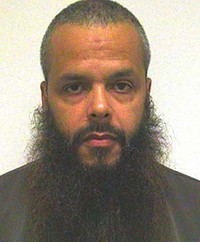
Abdul Nacer Benbrika led the 15-member terrorist cell in Melbourne.
Family links strong in Australian cells
SMH – Debra Jopson -February 6, 2012
FAMILY connections and friendships are at the core of the terrorist networks active in Australia over the past 12 years, a Monash University researcher has found.Most of the 57 people identified were recruited through close contact with friends or relatives involved in extremist groups.
Shandon Harris-Hogan drew maps of the links between violent jihadists in Australia, including people deported on security grounds, or reported missing or dead while engaged in terrorist activities overseas
The pattern he found is in keeping with studies of Fatah, Hamas, Hezbollah, Palestinian Islamic Jihad and Turkish terrorists, which revealed that about one in five involved individuals were direct kin, while seven in 10 were close friends as youths.
”You keep getting the same names,” he said. ”A lot have intermarried into each other’s families and have been convicted or involved in the same plots together.”
Mr Harris-Hogan, who had access to transcripts of police recordings from Operation Pendennis, Australia’s biggest terrorism investigation, found within the 15-member Melbourne cell led by Abdul Nacer Benbrika, now in jail,was a clique that included brothers, a cousin and a close childhood friend of Fadl Sayadi, a Benbrika lieutenant.
Moustafa Cheikho, from the Sydney cell, and his uncle, Khaled Cheikho, trained with Laksha e-Taiba in Pakistan. Khaled Cheikho was married to a relative of the terrorist associate Rabiyah Hutchinson.
Mohammed Omar Jamal, also convicted as part of the Sydney cell, is the brother of Saleh Jamal, who left Australia on a false passport in 2004, then spent two years in a Lebanese prison for terrorism offences. The Sydney cell leader, Mohamed Ali Elomar, is related to Hussein El Omar, who has appealed against a conviction for terrorism offences in Lebanon.
While there are some connections to individuals in family groups, the rest of those groups have no involvement and none is suggested.
Mr Harris-Hogan warned against stereotyping families and said some disapproving relatives had talked extremists into dropping out of radical groups.
Of the 57 jihadists whose back- ground he has studied, 24 trained in camps in Afghanistan, Pakistan, Lebanon, Somalia, Yemen, Malaysia or the Philippines. Since a US clampdown on militia camps in Afghanistan, Pakistan and Iraq, the focus had shifted to Lebanon and Somalia, he found.
His colleague at the university’s global terrorism research centre, Andrew Zammit, has found that six in 10 of those who have faced terrorism charges in Australia have been Muslims of Lebanese descent, a phenomenon unique to this country.
Of 33 alleged jihadists in Australia since the September 11 attacks in the US, 20 were of Lebanese descent, while at least 16 Australians have been arrested in Lebanon over alleged terrorist activity, he found.
Violent jihad attempts have rarely emanated from Lebanese migrant communities in Europe and the US, even though they are much larger than Australia’s, Mr Zammit said.
”One explanation could be the social and economic disadvantage faced by Lebanese-Australian Muslims but that wouldn’t explain why a specific few dozen people turn to terrorism when tens of thousands in similar circumstances do not,” he said. ”Keep in mind that this is a small sample size and another set of arrests could significantly change the figures.”
Another terrorism analyst, Sam Mullins, a research fellow at Wollongong University’s centre for transnational crime prevention, said that the preponderance of terrorists of Lebanese heritage reflected Australia’s immigration history.
DEBRA JOPSON
04 Feb, 2012 – Canberra Times
The campsite on the 50,000-hectare cattle station in the red dirt country at Louth was booked by phone in the name of Adam George.
Expecting a group of feral fox and pig hunters on safari to the back of Bourke, the property owner left directions in a mailbox and saw just one man, who simply called himself ”Joe”.
The company Joe kept alarmed the locals. The seven men – led by Aimen Joud from Melbourne and Mohamed Ali Elomar from Sydney – got lost and had to ask for directions.
”They stood out to the local community when they were driving through … Some of them were wearing camouflage fatigues … Some of them are large gentlemen, so just their physical presence stands out,” NSW Police terrorism investigations squad head Detective Inspector David Gawel, says.
Of course, Adam George was a fake name that had been previously used to try to buy laboratory gear to manufacture chemicals to build a bomb.
The men were on a training and bonding exercise, armed with .308 and .22 rifles and components of an explosive device.
The Louth trip, said the Victorian Court of Appeal last June, was the most significant of several group exercises between two terrorist cells based in Sydney and Melbourne whose members pledged allegiance to Abdul Nacer Benbrika, an Algerian-born pensioner sheikh living in Melbourne.
Jenny Stokes
Research Director
Salt Shakers
It Is very sad to hear those stories, especially that I am Christian from Lebanese Background. Anyway I pray that the Lord will open their mind and their heart and they can come to the Lord to clean them and wash away their sinful nature and they become new people in Jesus blood.
Kind Regards,
Suzy